Posts

Showing posts with the label Javascript

Upgrading Lodash from 3.x to 4.x

Spanish version / Versión en Español There are many breaking changes from version 3.x to 4.x; all changes are detailed in the Lodash changelog . There is also a list of deprecated functions , with a regex you can use to detect usages in your code. However, since it is not an exhaustive list, I will list the changes I encountered when performing my own migration, to help anyone undergoing the same process. Direct renames This section includes functions in which only the name changed, i.e. the arguments and return value are the same. 3.x 4.x contains includes first head rest tail invoke invokeMap padLeft padStart padRight padEnd Direct renames if not using thisArg This section includes functions in which the only change is dropping "thisArg". If you are not using it, you can just rename. If you are using thisArg in 3.x, it can be dropped if you are using iteratee to acce...

Actualizando Lodash de 3.x a 4.x

Versión en inglés / English version Hay varios cambios que rompen código de la versión anterior al pasar de Lodash 3.x a 4.x; todos los cambios están detallados en el registro histórico de cambios de Lodash . Además, hay una lista de funciones obsoletas ( deprecated ) , con una expresión regular para encontrar usos de las mismas en tu código. Sin embargo, dado que ambos recursos no son exhaustivos, listaré los cambios que encontré al realizar mi propia migración, a fin de ayudar a quien atraviese el mismo proceso. Cambios de nombre directos Esta sección incluye funciones donde sólo el nombre cambió, vale decir, los argumentos y retorno son los mismos que en 3.x. 3.x 4.x contains includes first head rest tail invoke invokeMap padLeft padStart padRight padEnd Cambios de nombre directos (en caso de no usar thisArg) Esta sección incluye funciones en donde el único cambio es quitar el...

Introduction to Web Programming

Image
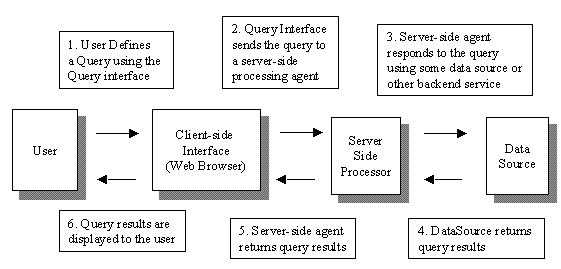
Spanish version / Versión en Español General Concepts When first facing this new development environment, it's easy to become confused due to the enormous variety of "technologies": HTML, CSS, Javascript, JQuery, PHP, MySQL, ASP.NET, Bootstrap, SQL Server, Ruby on Rails and many more. The answer to this problem is that every web-related technology can be classified in a certain category. All technologies in that category are essentially equivalent, and deciding which one to use is no more than an administrative decision (though, as usual, some technologies are better suited than others for specific problems or scenarios). Once we know which category a technology belongs to, we already understand 60% of all there is to know about it. The remainder can be completed with a good reference for the API and syntax. General structure of a web application Every web app does essentially the same, no matter which technologies it uses: Provide a qu...

Introducción a la Programación Web

Image
Versión en inglés / English version Generalidades Ante el primer contacto con este nuevo entorno de desarrollo, es fácil marearse ante la gran variedad de “tecnologías”: HTML, CSS, Javascript, JQuery, PHP, MySQL, ASP.NET, Bootstrap, SQL Server, Ruby on Rails y muchas más. La respuesta a este problema es que toda tecnología web puede clasificarse en una categoría. Todas las tecnologías de una misma categoría son esencialmente equivalentes, y decidir cuál usar es una decisión burocrática (aunque, como siempre, algunas tecnologías son mejores que otras en ciertas situaciones). Una vez que sabemos a qué categoría pertenece una tecnología, ya entendemos el 60% sobre ella. El resto es conseguir una buena referencia para la API y la sintaxis. Esquema general de una aplicación web Toda aplicación web hace básicamente lo mismo, más allá de qué combinación de tecnologías use: Proveer una interfaz de consulta/ingreso de datos (frontend) : Para que el usuario ingr...