Posts

Showing posts with the label PHP

Symfony 2 ignoring changes in parameters.yml

Spanish version / Versión en Español Say we want to change the database host because we changed our hosting service provider. We happily edit parameters.yml and upload it back up to the server, but we still get the "Connection timed out" error. The solution is clearing the cache, but without direct access to the server, doing that via FTP might take ages. In my case, a simpler solution was to delete only the app/cache/prod/appProdProjectContainer.php file, which seems to be where Symfony 2 caches its parameters. I'd like to personally thank the debug_print_backtrace() function. If you use it, make sure to do so with the DEBUG_BACKTRACE_IGNORE_ARGS flag, or you will get an illegible chunk of text.

Symfony 2 no toma cambios en parameters.yml

Versión en inglés / English version Supongamos que queremos cambiar el host de la base de datos porque migramos de hosting. Lo cambiamos alegremente en parameters.yml , pero sigue dando el error "Connection timed out". La solución es borrar la cache, pero si no se tiene acceso directo al servidor, hacerlo por FTP puede demorar una eternidad. La solución en mi caso fue borrar sólo el archivo app/cache/prod/appProdProjectContainer.php , donde aparentemente Symfony 2 cachea los parámetros. Quiero agradecer cordialmente a la función debug_print_backtrace() de PHP. Si la usan, asegúrense de invocarla con el flag DEBUG_BACKTRACE_IGNORE_ARGS, o les va a salir un choclo ilegible.

Introduction to Web Programming

Image
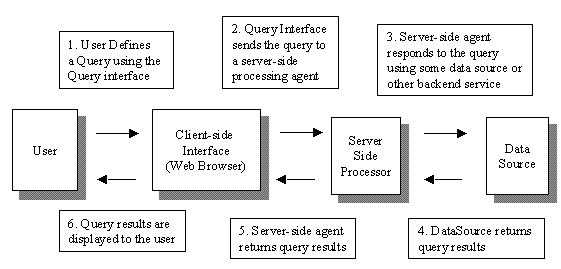
Spanish version / Versión en Español General Concepts When first facing this new development environment, it's easy to become confused due to the enormous variety of "technologies": HTML, CSS, Javascript, JQuery, PHP, MySQL, ASP.NET, Bootstrap, SQL Server, Ruby on Rails and many more. The answer to this problem is that every web-related technology can be classified in a certain category. All technologies in that category are essentially equivalent, and deciding which one to use is no more than an administrative decision (though, as usual, some technologies are better suited than others for specific problems or scenarios). Once we know which category a technology belongs to, we already understand 60% of all there is to know about it. The remainder can be completed with a good reference for the API and syntax. General structure of a web application Every web app does essentially the same, no matter which technologies it uses: Provide a qu...

Introducción a la Programación Web

Image
Versión en inglés / English version Generalidades Ante el primer contacto con este nuevo entorno de desarrollo, es fácil marearse ante la gran variedad de “tecnologías”: HTML, CSS, Javascript, JQuery, PHP, MySQL, ASP.NET, Bootstrap, SQL Server, Ruby on Rails y muchas más. La respuesta a este problema es que toda tecnología web puede clasificarse en una categoría. Todas las tecnologías de una misma categoría son esencialmente equivalentes, y decidir cuál usar es una decisión burocrática (aunque, como siempre, algunas tecnologías son mejores que otras en ciertas situaciones). Una vez que sabemos a qué categoría pertenece una tecnología, ya entendemos el 60% sobre ella. El resto es conseguir una buena referencia para la API y la sintaxis. Esquema general de una aplicación web Toda aplicación web hace básicamente lo mismo, más allá de qué combinación de tecnologías use: Proveer una interfaz de consulta/ingreso de datos (frontend) : Para que el usuario ingr...